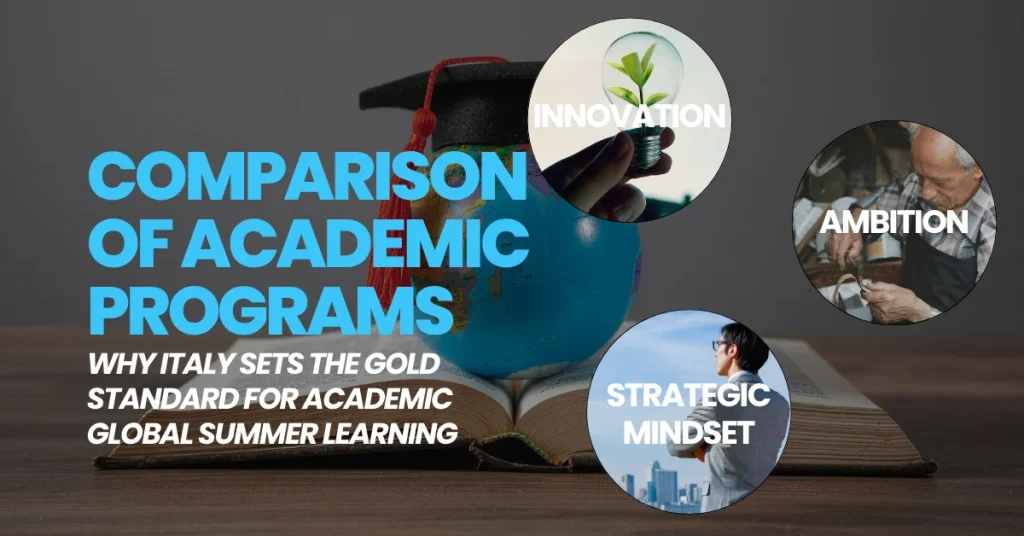
Why Italy Sets the Gold Standard for Academic Global Summer Learning
Three Strong Contenders - Only One Winner
For many international students, participating in a summer program abroad is both exciting and demanding. These experiences often serve as a crucial bridge between their current state and the higher education, helping students adapt to new, more demanding academic expectations, teaching styles, and multicultural environments.
In the past, there were limited options - nowadays, countries that were the outsiders took the pole position and here is why...
Throughout the past century, UK was known for offering structured seminars at their historic campuses, and a university-style environment that promised to strengthen debating and writing skills. With a strong focus on tutorial-based teaching, critical thinking, and academic reputation it created a highly formative learning experience.
In contrast, the United States is more energetic and ambitious, built around leadership labs, pitch sessions, and innovation challenges that encourage an entrepreneurial mindset.
These summer programs are aimed mainly at students aged 14-17 and are suitable for learners from both national and international systems whether a student is moving up within their home educational framework or entering a new one. But how does the Italian system differ?
Where Culture Becomes a Competitive Advantage
This is where the difference happens. An international Italian summer program doesn’t just teach - it immerses all previously mentioned aspects of both systems. Students don’t study from slides, they step into the ecosystems where these industries were born. They sense what their destined pathway is and are guided by professionals into entering with a head start.
Milan isn't a classroom, it is a living laboratory that provides:

Direct access to family-led
heritage businesses

Entrepreneurial thinking shaped
by centuries of craftmanship

Sustainable innovation
rooted in real industry
practice

A balance of ambition and
self-determined lifestyle
The UK refines, the US energizes - but Italy transforms. A truly global summer program should expand perspective, elevate taste, and develop leadership with cultural intelligence. Italy doesn’t just compete. It connects tradition with tomorrow - and that’s a winning formula